-- Section still in works --
Immediate postpartum: what's best for baby:
Skin-to-skin
Delayed cord clamping
IMPORTANT DISCLAIMER
Please note that as much as there are undeniable benefits of skin-to-skin or delayed cord clamping, it is a VERY PERSONAL decision requiring thorough personal research as it comes to the procedures listed below. As a doula, I do not have any agenda or interest of you doing one or another. It is your baby and your decision. All I care about is an informed choice for every parent I work with. Because you are the parent, and this is your baby. And an informed decision is often hard to make with only one input - the one of your care provider. Read, research, and follow your intuition. You know best what is best for your baby.
Procedures:
Vitamin K shot
Eye ointment
Hep B Vaccine
Bath
Circumcision
Vitamin K Shot
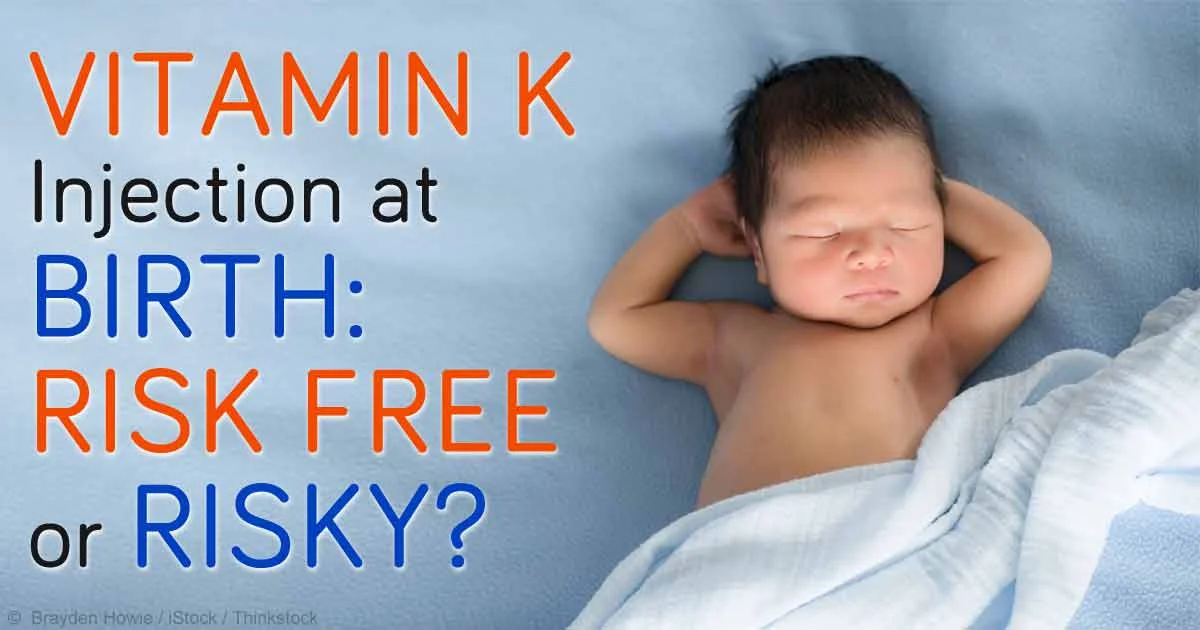
Vitamin K injection (1.0 mg) is given routinely to the newborns shortly after birth (typically within 1 hour, can be delayed till 6 hours) to support the newborn's blood clotting capabilities in order to prevent unexpected bleeding caused by low levels of vitamin K-dependent blood clotting factors.
The syndrome of vitamin K deficiency bleeding (VKDB) occurs in approximately 1 in 10,000 babies. Hemorrhagic disease that occurs from week 2-12 of life is the most dangerous form. Half of these affected babies suffer sudden bleeding into the brain, and 20 percent of affected babies die. Studies have shown that a single injection or oral dose of vitamin K at birth results in adequate coagulation status and vitamin K levels for up to three months following birth.
Injected vitamin K ran into a problem when researchers in 1990 noted an increased incidence of childhood cancer in children given vitamin K injections at birth. Specifically, they found that injected vitamin K doubled the incidence of leukemia in children less than ten years of age. A subsequent study in 1992 revealed the same association between injected vitamin K and cancer, but no such association with oral vitamin K. These researchers recommended exclusive use of oral vitamin K.
Source: CureGuide or download this documentOral Vitamin K option
For more evidence based information, references to studies, pros and cos, check this website.
This website also lists numerous studies, abstracts and other resources on administration of Vitamin K to Newborns.
Interesting articles (naturally minded):
https://www.mamanatural.com/routine-newborn-procedures/
https://www.thehealthyhomeeconomist.com/oral-vitamin-k-better-vitamin-k-shot/?fbclid=IwAR0JDo70jvvPm9PAAimbSFa-Ba1zdXPAWralgjgFCYRPUCaAKar_usQtSnE
The Vitamin K in the shot is a synthetic version of Vitamin K, called phytonadione, and it is given at a dose that is five hundred times greater than the infant's recommended daily allowance of this nutrient (being 2 mcg).
Common names for Vitamin K are AquaMEPHYTON, Mephyton, phylloquinone , phytomenadione , vitamin K 1, and vitamin K 4. Phytonadione is the generic name for Vitamin K.
Information on Vitamin K (Phytonadione) - overview, usage, safety, side effects, etc.
Some key facts:
Vitamin K injection in mandatory in some states of the U.S. and not in the others (it is mandatory in NY State, it is not in NJ state)
Some other countries, mostly European offer an alternative to the shot in form of oral drops
Vitamin K deficiency-related bleeding (VKDB) occurs in approximately 1 in 10,000 babies.
Half of these affected babies suffer sudden bleeding into the brain, and 20 percent of affected babies die.
If you're interested in oral drops, please contact a midwife in your area, or a birthing supply company (such as birthwithlove.com), or Scientific Botanicals (206 527-5521) where your health care provider can order liquid vitamin K directly.
Please note that if you're giving birth in a hospital in NYC, and decided not to give your baby the Vitamin K shot, it will not be easy to avoid this procedure and will require some extra work from you.
More resources:
General Discussion of Oral Vitamin K instead of Injected Vitamin K
General Discussion about Controversy over Administration of Vitamin K to Newborns
Recommended Oral K brand: HoneyCombs Industries
Vitamin K injection at birth as told by a pediatrician:
"You know what “synthetic vitamin K” enthusiasts don’t understand? The thought that babies (and all animals for that matter) have lower levels of vitamin K at birth for a beneficial, protective, reason. I’m just going to throw these “common sense-based” thoughts out there but let’s consider them:
and BTW this goes for the Drops as well as the Shot First, in order to absorb vitamin K we have to have a functioning biliary and pancreas system. Your infant’s digestive system isn’t fully developed at birth which is why we give babies breast milk (and delay solids) until they are at least 6-months-old, and why breast milk only contains a small amount of highly absorbable vitamin K. Too much vitamin K could tax the liver and cause brain damage (among other things). As baby ages and the digestive tract, mucosal lining, gut flora, and enzyme functions develop, baby can process more vitamin K. Low levels of vitamin K at birth just…makes…sense. ???
Secondly, cord blood contains stem cells, which protect a baby against bleeding and perform all sorts of needed repairs inside an infant’s body. Here’s the kicker, in order for a baby to get this protective boost of stem cells, cord-cutting needs to be delayed and the blood needs to remain thin so stem cells can easily travel and perform their functions. Imagine that, baby has his/her own protective mechanism to prevent bleeding and repair organs…that wasn’t discovered until after we started routinely giving infants vitamin K injections.
Third, a newborn might have low levels of vitamin K because it’s intestines are not yet colonized with bacteria needed to synthesize it and the “vitamin K cycle” isn’t fully functional in newborns. It makes sense then to bypass the gut and inject vitamin K right into the muscle right? Except baby’s kidneys aren’t fully functional either. ???
Fourth, babies are born with low levels of vitamin K compared to adults, but this level is still sufficient to prevent problems; vitamin K prophylaxis isn’t necessarily needed.
Finally, several clinical observations support the hypothesis that children have natural protective mechanisms that justify their low vitamin K levels at birth . I don’t know about you, but we should probably figure out why that is before we “inject now and worry about it later.”
Do you know why vitamin K is pushed on parents and their children? Because pharmaceutical companies don’t like to lose money, doctors don’t like to be questioned, the American Academy of Pediatrics dare not change its recommendations."
"Since 1985, the medical profession has known that oral vitamin K raises blood levels 300 - 9,000 times higher. The injectable vitamin K, results in vitamin K levels 9,000 times thicker than adults blood.
Baby's blood thickened with vitamin K, causes a situation where stem cells have to move through sludge, not nicely greased blood vessels full of blood which can allow stem cells easy access to anywhere. Maybe one day it will dawn on the medical profession that not only are cord blood stem cells important and useful to the newborn baby, but that stem cells need to thin blood for a reason."
"Any fetus which gets being wrung out like a wet towel while traveling down a narrow drain pipe, can incur damage in any part of the body, including in the brain, and needs an in-built fix-it. And stem cells cross the brain blood barrier. In fact, stem cells can go ... anywhere!!! Amazing don't you think. God's design has solutions for situational problems. Three solutions, actually. The second is the fact that naturally, in the first few days, a baby's blood clotting factors are lower than normal.
But ... pediatricians consider this a ... "defect" ... so want to give vitamin K which results in blood nearly 100 times thicker than an adult's. This vitamin K injection, so they say ... (like they say immediate cord clamping is safe, and normal, and delayed cord clamping is an unproven intervention) ... is because the baby wasn't designed right, and if you don't give a vitamin K injection, the baby "could bleed to death".
It's not for nothing that the vitamin K syringe, sits right alongside that cord clamp and the scissors!
But there is an unanswered question: "Why are blood clotting factors in babies low in the first few days after birth? Why has a baby got much thinner blood as a result?"
Might a logical hypothesis be, that thinner blood allows freer and quicker access of cord blood stem cells to any part of the body damaged during birth? After all, why should stem cells have to fight through a baby's blood which is now 100 times thicker than any adult's, courtesy of another needle?"
Vitamin K controversy
http://www.vaclib.org/basic/vitamin-k.htm
Dr. Humphries on vitamin K
https://m.youtube.com/watch?v=6rxEo8R5Fwk
Reactions to vitamin K
http://link.springer.com/article/10.1023%2FA%3A1011237019082
State mandates vitamin K
http://proliberty.com/observer//19990710.htm
Vitamin K bleeding, does it really exist?
http://www.maternity.org.nz/.../VITAMIN%20K%20DEFICIENCY...
Synthetic shots, no thanks
http://www.livingwhole.org/synthetic-vitamin-k-shot/
http://www.rxmed.com/.../CPS-%20.../VITAMIN%20K.html
Vaccination info on K
http://www.vaccination.inoz.com/VitaminK.html
K shot or gentle birth?
http://www.givingbirthnaturally.com/newborn-vitamin-k.html
K issues, healthy alternatives
http://www.thehealthyhomeeconomist.com/skip-that-newborn.../
Anaphylactic shock K
http://www.tandfonline.com/.../10.3109/14767058.2013.847425
K rich foods
https://www.healthaliciousness.com/.../food-sources-of...
Probiotics and k in pregnancy
http://bodyecology.com/.../probiotics_essential_vitamin_k...
https://www.scribd.com/.../Merck-Vitamin-K-Package-Insert...
Erythromycin Eye Ointment
Is Erythromycin Eye Ointment Always Necessary for Newborns?
The Canadian Paediatric Society is no longer recommending routine eye ointment. They say it's not effective. Maternal screening and newborn observation are recommended instead
The Canadian Society of Pediatrics has recommended against this treatment of babies’ eyes.
Circumcision
National Organization of Circumcision Information Resource Centers has produced a 20-minute educational video entitled “Circumcision? Make the Informed Decision,” narrated by Dean Edell, M.D.
This video, designed for expectant parents, briefly shows an infant circumcision. It discusses the anatomy of the foreskin, as well as the foreskin’s protective and sexual functions. I hope this video plus additional research will better equip you to make an informed decision about circumcision.
More information and research:
A circumcision resource page developed for educators and expectant parents: Circumcision and Foreskin Care Information - Your first stop in making a circumcision decision. Here you will find videos, articles, and pamphlets that discuss various aspects of the circumcision decision, as well as proper care of the intact child and how circumcision impacts breastfeeding. Included is “The Prepuce,” a video produced by George Denniston, M.D., that discusses in detail the anatomy and functions of the foreskin. Many physicians say that they learned little or nothing about the anatomy and functions of the foreskin in medical school. This video attempts to fill that gap.
"How Male Circumcision May be Affecting Your Love Life" by Christiane Northrup, MD
Danish Study "Male circumcision leads to a bad sex life" November 14, 2011
In 2014, the United Kingdom's National Health Service stated that the risks of circumcision outweigh the benefits, the exact opposite position of the AAP.
On August 27, 2012, the American Academy of Pediatrics issued a revised Circumcision Policy Statement saying that the benefits outweigh the risks. The APP states though that the health benefits are not great enough to recommend routine circumcision: "…preventive health benefits of elective circumcision of male newborns outweigh the risks of the procedure. Although health benefits are not great enough to recommend routine circumcision for all male newborns, the benefits of circumcision are sufficient to justify access to this procedure for families choosing it … Parents ultimately should decide whether circumcision is in the best interests of their male child."
More resources with links to studies in this document.
In case of preterm birth
A word about Synagis offered by doctors in NICU.